How to Plan a Scenic Road Trip: A Step-by-Step Guide
Get WanderWay on the App Store. Free to try, then a one-time unlock.
A good scenic road trip comes down to five decisions: a route with real character, a daily driving limit you will actually keep, a few stops worth getting out for, a simple budget and a car that is ready. Make those five choices before you leave and the rest of the trip takes care of itself. This guide walks through each one for a weekend drive or a longer journey, with family-friendly tips throughout. It also shows how WanderWay, our driving app, handles the parts of the trip that happen on the road itself: the navigation, the stories about what you are passing and the stops that suit your passengers.
Make the Drive Part of the Adventure Explore nearby landmarks and nature preserves with navigation, live narration, and offline place details along your route. Visit
TL;DR
-
Choose the route by theme and time available. Pick one region or corridor instead of trying to see everything.
-
Keep driving days short. Scenic roads are slower than highways, so plan for fewer miles and leave about a fifth of the day open.
-
Plan two anchor stops and one flexible stop per day, plus restroom and stretch breaks if kids are along.
-
Budget with one formula: fuel, lodging, food, tolls and parking, activities, then add a buffer.
-
Check the car, pack a roadside kit and download your area for patchy coverage. WanderWay gives you navigation, live narration and offline place descriptions in one app.
Step 1: Decide what kind of scenic trip you want
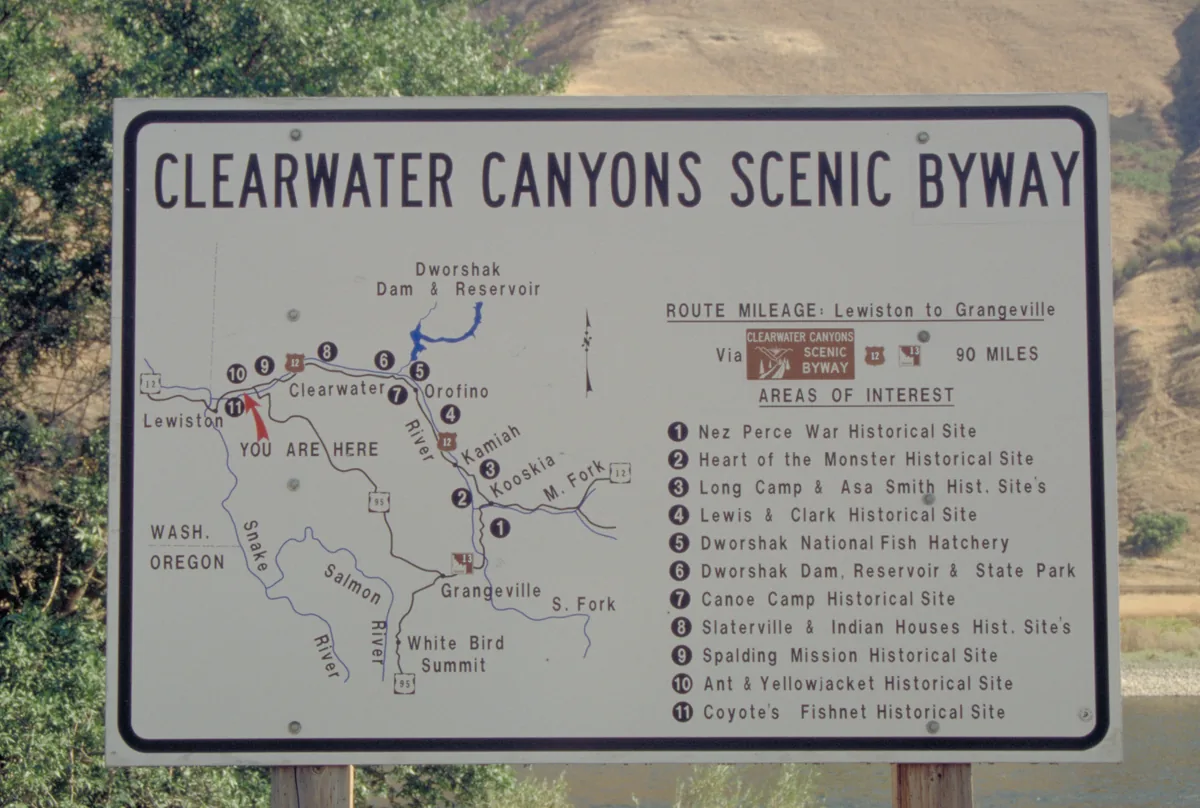
Start with a theme, not a map. “Scenic” means different things to different people, and the theme decides everything that follows.
-
Landscape: ridgelines, coastlines, mountain passes, desert canyons, fall color.
-
History: small towns, battlefields, old main streets, historic landmarks.
-
Nature: parks, preserves, waterfalls, wildlife areas.
-
Family fun: short legs, playful stops, easy restroom access.
-
Everyday upgrade: your commute or weekend errand run, taken on a better road.
Once you know the theme, match it to the time you have. A morning loop, a full weekend and a week-long trip call for different scales. For a weekend, pick one region within a couple of hours of home. For a week or more, pick one corridor or loop, such as a coastal highway or a mountain parkway, rather than stitching together several.
If you are not sure where to look, start with the roads the federal government has already vetted. The U.S. Department of Transportation designates National Scenic Byways and All-American Roads for their scenic, historic, cultural, natural, recreational or archaeological qualities. A road needs at least one of those qualities to be a National Scenic Byway, and All-American Roads must be distinctive enough to be a destination in themselves. Those lists are a good shortcut to roads that reward the drive.
Step 2: Set a driving limit before you add attractions
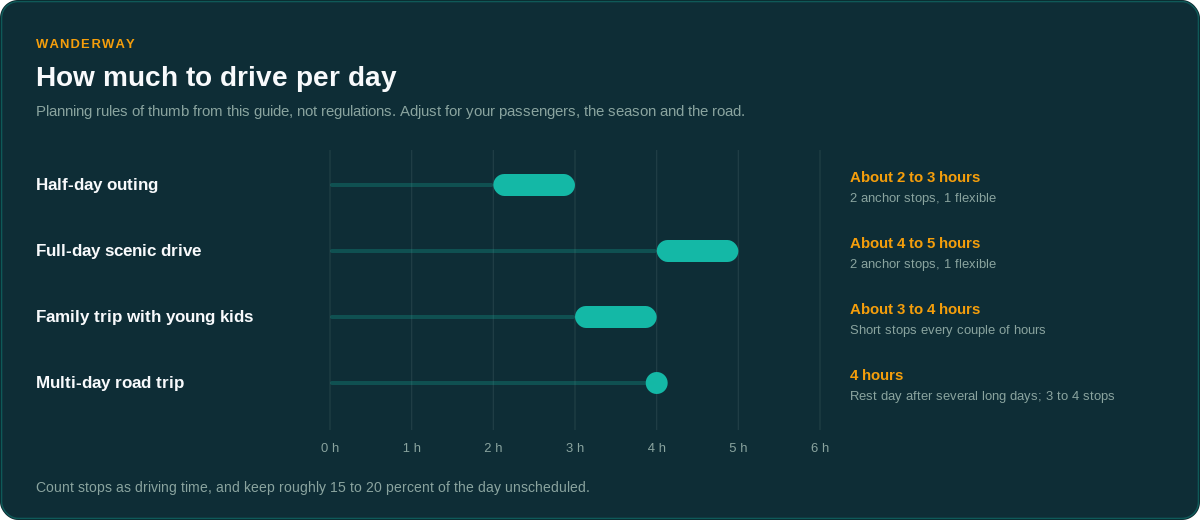
This is the step that separates a relaxed trip from a rushed one. Scenic roads are slower than interstates: curves, grades, slow traffic at overlooks, photo pull-offs and the occasional gravel stretch. A map app’s estimate rarely includes any of that.
Here are practical ceilings that work for most drivers:
| Trip type | Driving per day | Stops |
|---|---|---|
| Half-day outing | About 2 to 3 hours | 2 anchor stops, 1 flexible |
| Full-day scenic drive | About 4 to 5 hours | 2 anchor stops, 1 flexible |
| Family trip with young kids | About 3 to 4 hours | Short stops every couple of hours |
| Multi-day road trip | 4 hours, with a rest day after several long days | 3 to 4 stops |
These are planning rules of thumb, not regulations. Adjust them for your own stamina, your passengers and the season. Cut your expectations further in winter, after rain, or on unpaved roads, where speeds drop quickly.
Two habits keep the limit honest:
-
Count stops as driving time. A viewpoint, fuel stop and lunch can turn a three-hour drive into a six-hour day.
-
Leave slack. Keep roughly 15 to 20 percent of the day unscheduled. If the day slips, cut a stop rather than speeding up.
A simple way to remember it: choose two anchor stops you will not skip, one flexible stop you will happily drop, and leave the rest of the day to discover things on the way.
Step 3: Build the route around stops worth making
With a theme and a driving limit, you can choose stops. Aim for variety within a day: something scenic, something with a story, a place to eat and a place to stretch.
Pick the anchors first
An anchor is the place the day is built around: an overlook at sunset, a historic village, a trailhead with a short walk. Choose one or two and plan everything else around them. If you want a sunset overlook, work backward from sunset time and park there with 30 minutes to spare.
Add flexible stops along the way
Flexible stops are the pull-offs, local diners, small museums and historic markers you can take or leave. Mark them as optional so you never feel obligated. This is also where local history lives: the old mill, the battle site, the town with an odd name. Many of the best are not on the typical top-ten lists.
Check each stop before you commit
Before finalizing a stop, confirm three things: it is open on your day and time, it fits the detour you can afford, and it suits your group. A beautiful trailhead is no use to a toddler who needs a nap in forty minutes.
Choose the shape of the route
Decide whether you want a loop or an out-and-back. A loop shows you new scenery the whole way. An out-and-back lets you drive the same road twice in different light, which can look like a completely different drive. In WanderWay, you can plan either shape, and the app builds the route around scenic preferences you set.
Step 4: Plan the family side of the trip
If kids are in the car, the stops are the trip. A few rules make everything easier.
-
Break often. Plan a stop roughly every two hours, sooner for toddlers. A planned stretch beats an emergency one.
-
Know where the restrooms are. On long rural stretches, facilities can be 30 miles or more apart. Mark them in advance.
-
Mix quiet and active stops. Follow a long overlook with a playground, a short trail or an ice cream stop.
-
Give kids a job. Let them pick one stop a day or look out for a landmark you will pass.
-
Make the drive itself interesting. A story about the river you are crossing does more for a restless back seat than another round of screen time.
This is where WanderWay is built to help. Kids Mode offers child-friendly stops and simplified stories, and Family Drives builds restroom and kid stops into longer travel days, so you are not hunting for a bathroom after the complaints begin.
One safety rule is not negotiable: never leave a child alone in a parked car. NHTSA warns that interior temperatures can reach deadly levels even on a 60°F day, so a quick stop is not a safe exception.
Step 5: Estimate the budget
A scenic trip costs less to plan than to fix. Use one formula:
Total cost = fuel + lodging + food + tolls and parking + activities
For fuel, divide your total miles by your car’s real-world miles per gallon, then multiply by the price per gallon. Use the mileage you actually get, not the sticker number. Mountain grades, a full car, luggage and a rooftop box all reduce it.
Worked example: a 400-mile weekend loop in a car that gets 28 miles per gallon, with gas at $3.40 per gallon, uses about 14.3 gallons, or roughly $49 in fuel. Add about 15 percent for detours and slow climbs and you land near $56.
Then add the rest:
-
Lodging: for a flexible trip, book only the first and last nights and decide the middle as you go, when the season allows it.
-
Food: set a daily amount and pack a cooler for lunches. Picnic stops at overlooks are often the highlight of the day.
-
Extras: ferries, parking at popular trailheads, park entry fees and tolls.
-
Buffer: keep 10 to 15 percent aside for surprises, separate from your normal spending.
Fuel prices change weekly, so use the current price at the pump or on your regular gas app on the day you build the budget, not a number from an old article.
Step 6: Get the car and the kit ready
A scenic road often means long stretches without services. Make sure the car is ready a week before you go, so there is time to fix anything you find.
NHTSA’s road trip checklist covers the basics:
-
Check tire pressure and condition.
-
Check wiper blades, fluid levels and lights.
-
Check the battery, coolant, belts and hoses.
-
Check for open safety recalls at NHTSA.gov/Recalls.
Consumer Reports adds that you should check the spare tire as well, replace wiper blades that are at least six months old, and have a shop inspect belts, hoses and fluids. If anything on the list is outside your comfort zone, book your regular mechanic before you travel.
For the roadside kit, pack:
-
A phone and charger, plus a car mount
-
A first-aid kit
-
A flashlight
-
Jumper cables
-
Nonperishable food and water
-
A tire gauge, duct tape and basic tools
Traveling with a pet? Secure it in a crate or seat harness. Traveling with kids? Add snacks, wipes, a change of clothes and a small trash bag within reach of the back seat.
Step 7: Prepare for patchy coverage
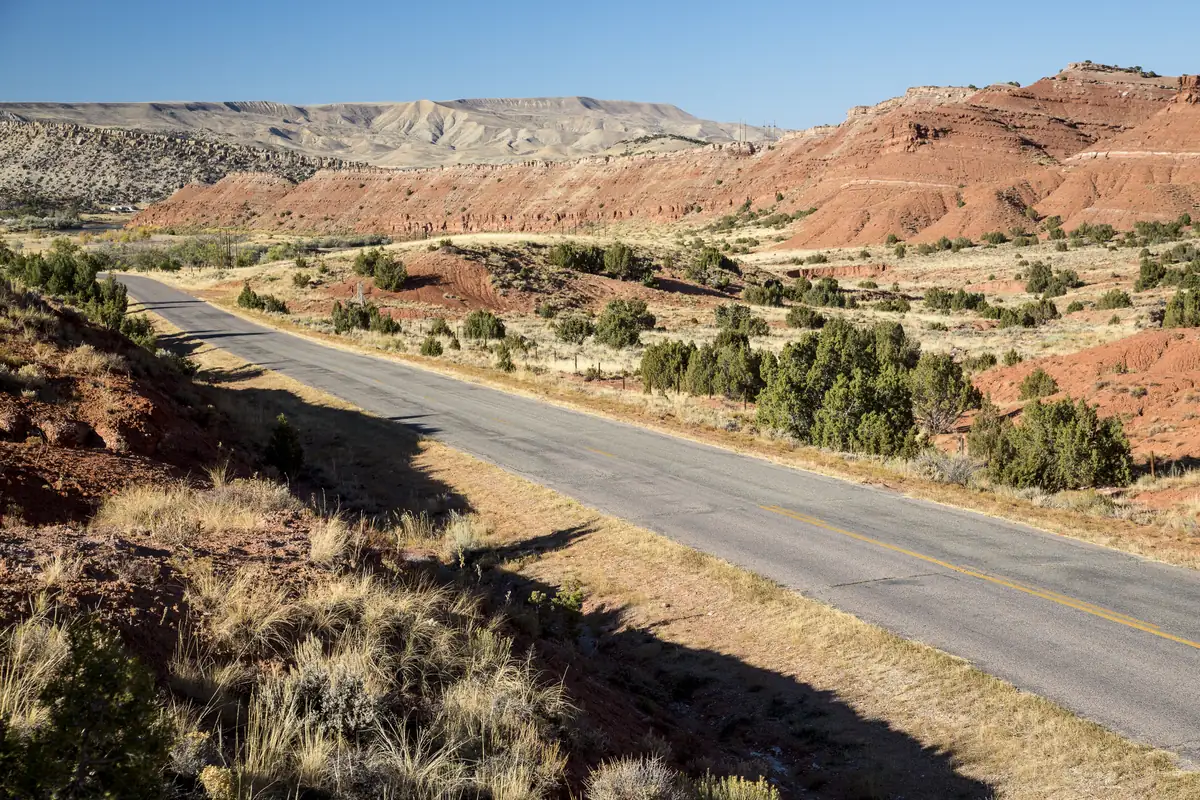
The best scenic roads are often the ones with the weakest signal: canyons, ridges, national forests and coastal cliffs. Plan for that before you leave.
-
Download any stop information while you still have Wi-Fi.
-
Share your route and rough schedule with someone at home.
-
Fill the tank whenever you pass a station on a remote road, even if you are at half a tank.
-
Note the next lodging address each evening so you are not searching for it on the road.
WanderWay is designed for this. You can download an area ahead of time, so its places, descriptions and photos are still there when the bars disappear.
How WanderWay fits into the trip
A paper plan only goes so far. Once you are moving, what you need is navigation that follows the route you chose and a reason to look out the window. WanderWay combines scenic navigation with live voice narration about local history and points of interest, so you hear the story of an overlook, a landmark or a town as you approach it. It works on iPhone, iPad, CarPlay and Mac.
Here is how it maps to the steps above:
-
Route and theme: set your scenic preferences and plan loops or out-and-back trips.
-
Stops: discover hidden gems such as overlooks, historic landmarks and nature preserves along the way.
-
Family: Kids Mode, Family Drives and restroom locations for longer trips.
-
Coverage: offline areas with place descriptions and photos.
-
Cost: it is a one-time purchase, WanderWay Unlock, with no ads and no subscription. You get a free 14-day trial first.
If you are planning a trip now, try WanderWay on a weekend drive and let the first route tell you whether it suits your style.
Plan a scenic weekend drive in one evening
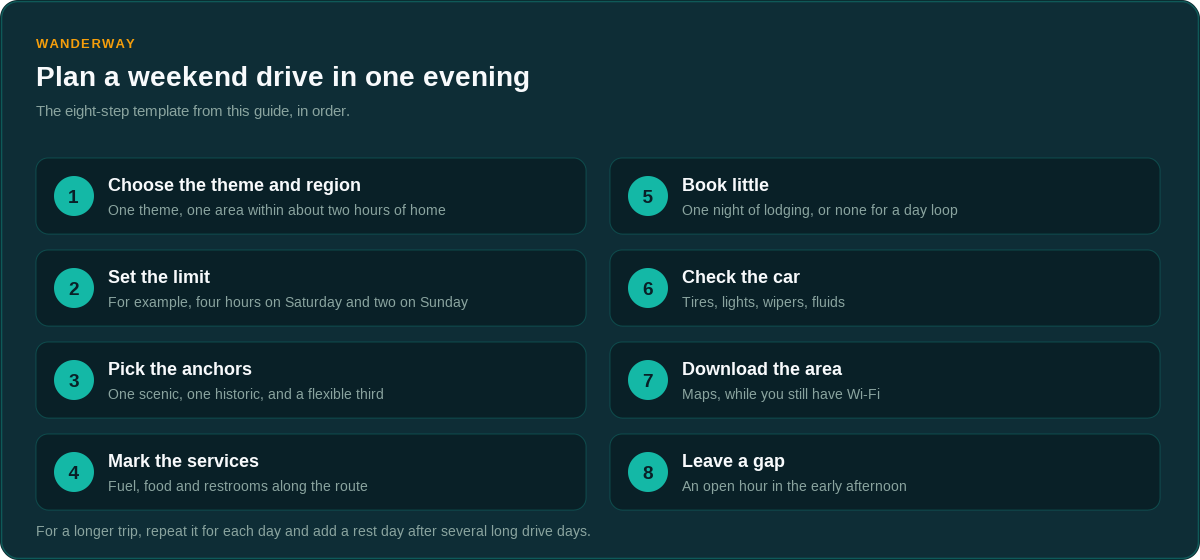
If you only have a weekend, here is a template you can fill in tonight.
-
Choose the theme and region. One theme, one area within about two hours of home.
-
Set the limit. For example, four hours of driving on Saturday and two on Sunday.
-
Pick the anchors. One scenic, one historic, and a flexible third.
-
Mark the services. Fuel, food and restrooms along the route.
-
Book little. One night of lodging, or none if it is a day loop.
-
Check the car. Tires, lights, wipers, fluids.
-
Download the area while you have Wi-Fi.
-
Leave a gap. An open hour in the early afternoon for whatever you find.
The same template scales up. For a longer trip, repeat it for each day and add a rest day after several long drive days so the trip stays enjoyable.
Timing: light, weather and season
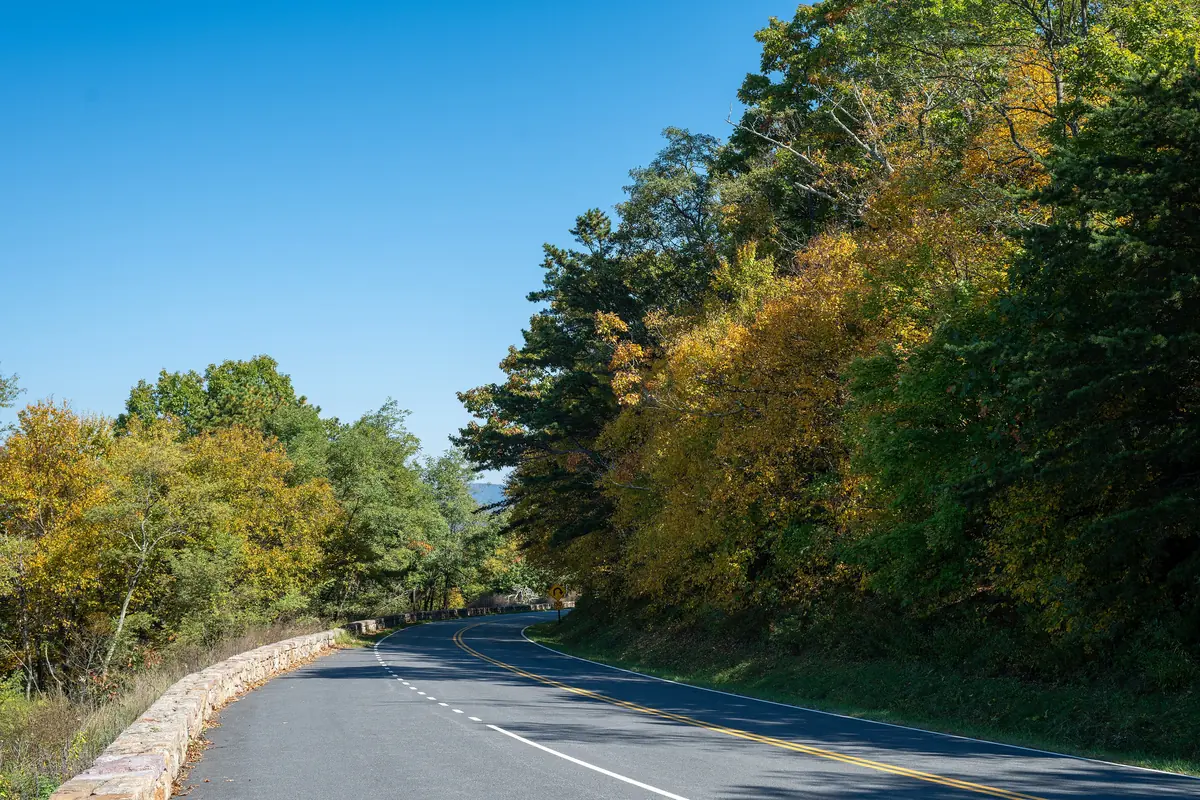
Scenic drives depend on light. The low sun lights ridges from the side in the early morning and late afternoon, which is when overlooks look best. Midday sun flattens landscapes, so that is a good time for a long lunch, a museum or a trail under trees.
Check the forecast and the road conditions each morning. Mountain passes can close in winter, some seasonal roads open only in summer, and fall color peaks shift from year to year. For official closures and conditions, check the state transportation department or the park service page for your route before you set out, and again that morning.
If you are driving a route you have never seen, add a margin. A three-hour map estimate can easily become a full day once you add stops, so cut a stop rather than drive faster when the day slips.
Common mistakes to avoid
-
Overpacking the schedule. Five stops a day sounds easy until each takes forty minutes.
-
Trusting the map’s drive time. It does not include the time you spend at the overlook.
-
Booking every night. On a flexible trip, over-booking removes the freedom you came for.
-
Skipping the car check. A flat tire is a small problem on a main road and a big one on a remote byway.
-
Forgetting the passengers. A stop that suits you but not the kids will cost you the next hour.
FAQ
How far should I drive in a day on a scenic road trip?
Plan about two to three hours of actual driving for a half-day outing and four to five hours for a full day. Scenic roads are slower than highways, so count stops as part of the driving time. With young kids, aim for the lower end.
How do I find the best scenic routes in the U.S.?
Start with roads designated as National Scenic Byways or All-American Roads, then narrow them by theme and distance from home. A navigation app that surfaces overlooks, landmarks and nature preserves along the way helps you find the smaller gems around them.
How do I plan a scenic weekend drive?
Choose one region within a couple of hours of home, set a driving limit for each day, pick two anchor stops and one flexible stop, and leave part of the day open. Check the car and download your area before you leave.
How much does a scenic road trip cost?
Add fuel, lodging, food, tolls and parking, and activities. Work out fuel by dividing total miles by your real-world miles per gallon and multiplying by the price per gallon, then add a 10 to 15 percent buffer. Use the price at the pump on the day you plan.
What should I pack for a family road trip?
Pack a phone and charger, a first-aid kit, a flashlight, jumper cables, nonperishable food and water, per NHTSA’s road trip advice. For kids, add snacks, wipes, a change of clothes and activities, and never leave a child alone in the car.